GSS CloudFront Origin Failover 
Working Principle 
If the primary origin is unavailable, or returns specific HTTP response status codes that indicate a failure, CloudFront automatically switches to the secondary origin.
CloudFront does the following for viewer requests:
- When there’s a cache hit, CloudFront returns the requested object.
- When there’s a cache miss, CloudFront routes the request to the primary origin in the origin group.
- When the primary origin returns a status code that is not configured for failover, such as an HTTP 2xx or 3xx status code, CloudFront serves the requested object to the viewer.
- When any of the following occur:
- The primary origin returns an HTTP status code that you’ve configured for failover
- CloudFront fails to connect to the primary origin
- The response from the primary origin takes too long (times out) Then CloudFront routes the request to the secondary origin in the origin group.
Note: CloudFront routes all incoming requests to the primary origin, even when a previous request failed over to the secondary origin. CloudFront only sends requests to the secondary origin after a request to the primary origin fails.
Implementation 
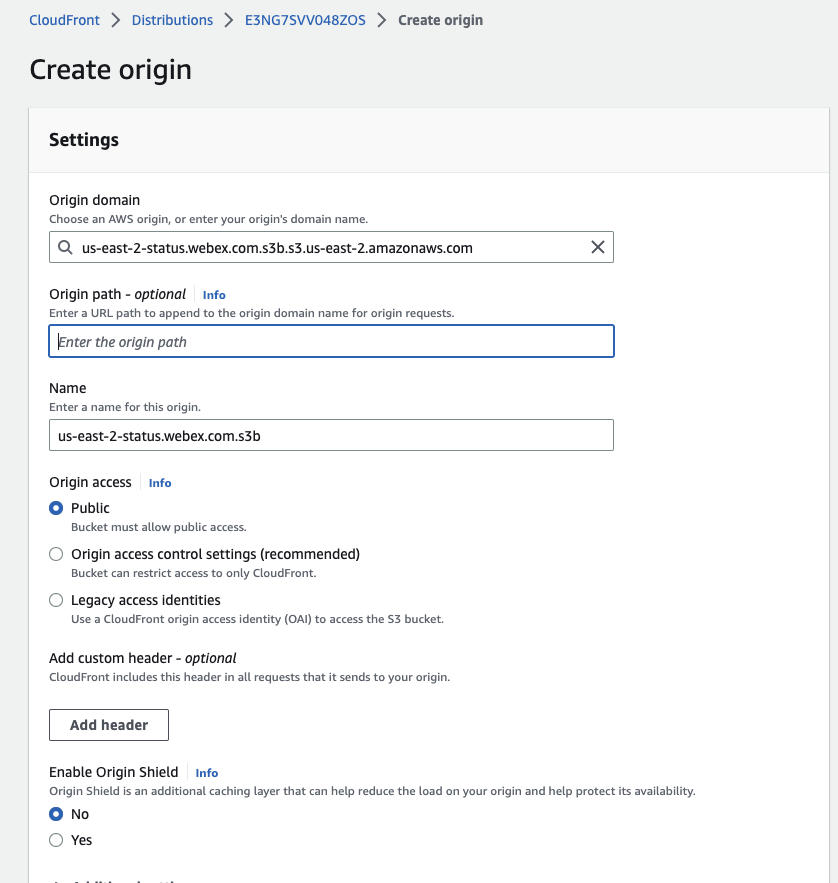
- Create another origin for cloudfront distribution
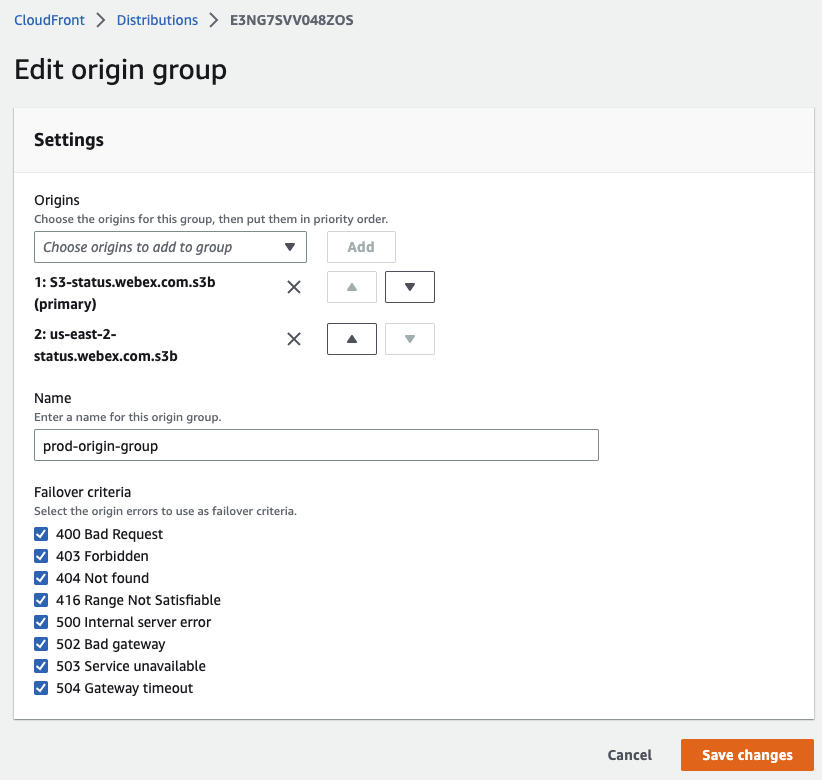
- Create origin group, select primary and secondary
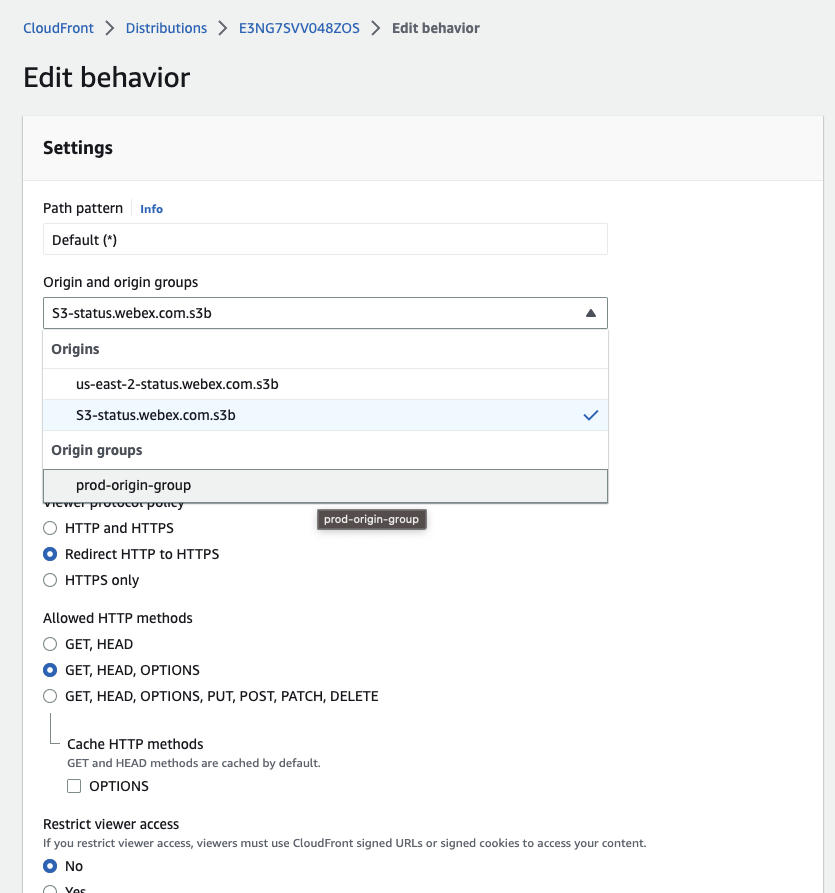
3. Edit a cache behavior to use the origin group