Overview
Types of Synthetic Monitoring 
API Based Monitoring 
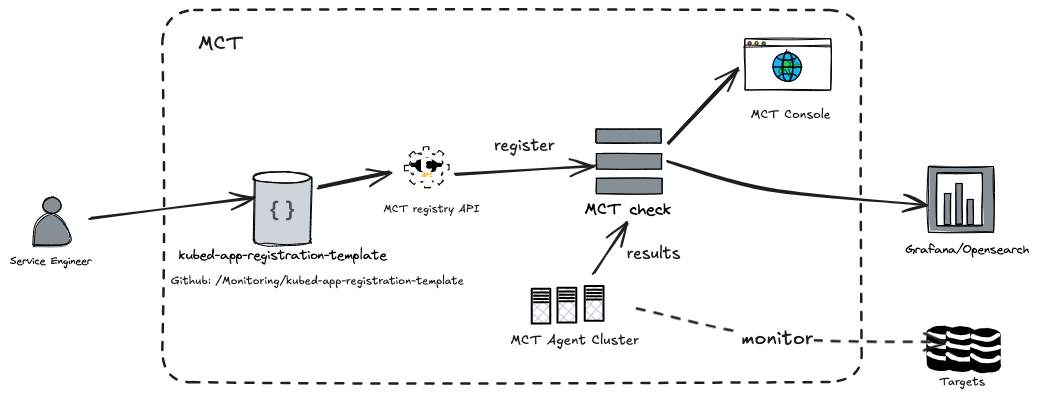
API Based Monitoring, also known as uptime monitoring, ensures that a site or service is accessible. It can also verify the proper functioning of the website or service, referred to as Advanced Availability Monitoring. In its simplest form, an availability monitor sends a GET request or ping and checks for a successful status code. More advanced monitors may check for specific content, measure response times, attempt user authentication, perform API calls, or verify DNS and SSL certificate entries.
Docker Based Monitoring 
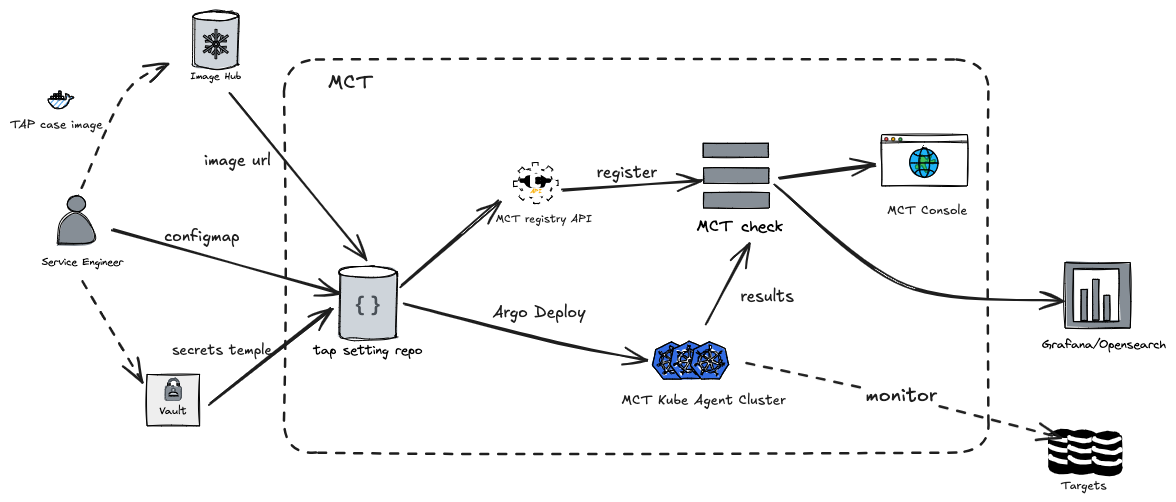
Docker Based Monitoring involves executing Docker images to perform monitoring tasks. This approach includes centralized configuration and secrets management to run the pulled Docker images effectively. It is designed to detect the success or failure of specific cases. Currently, this solution is adopted in E2E TAP cases of the Calendar Service.
UI Based Transaction 
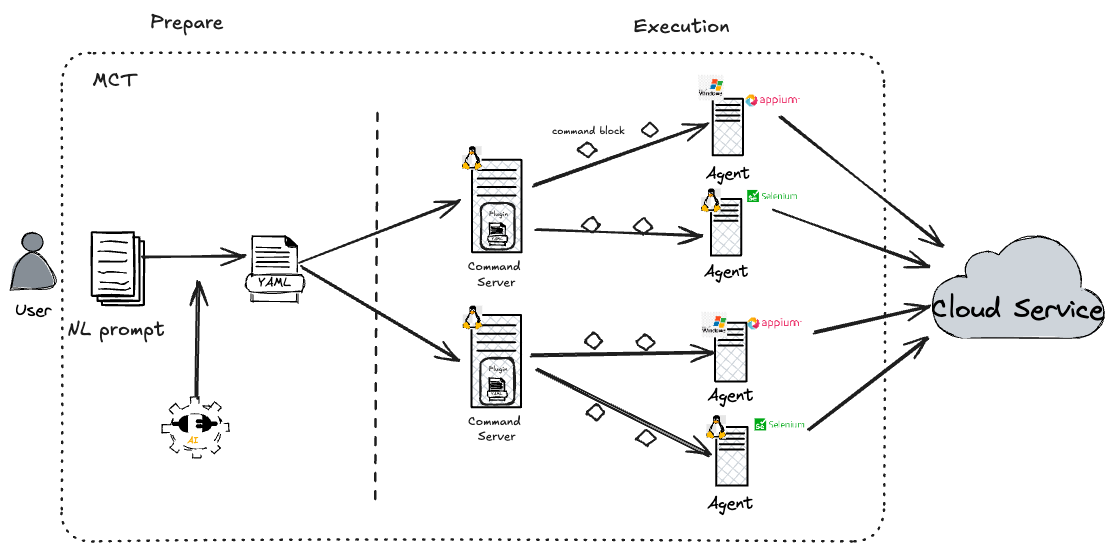
UI Based Monitoring, using Appium, simulates user interactions with an application or service to ensure all components function correctly from start to finish. By executing pre-scripted actions, this type of monitoring mimics real user behavior, detecting performance issues, errors, and bottlenecks within the entire workflow. UI Based Monitoring provides a comprehensive view of system health by validating the end-user experience, ensuring each step of the user journey meets expected performance standards.
Key Differentiators of MCT - comparing Prometheus Blackbox exporter & ThousandEyes 
- Multi‑Network Monitoring Perspectives MCT supports executing monitoring tests from both internal networks (intranet) and public networks (such as AWS). This enables organizations to observe service availability and performance from internal user perspectives as well as external, internet‑facing viewpoints. - ❌ Blackbox Exporter
- Middleware and Platform‑Level Monitoring MCT provides dedicated monitoring capabilities for commonly used enterprise middleware and platforms, including Hadoop, Kafka, and RabbitMQ. This allows monitoring to align more closely with real operational and application scenarios, rather than being limited to generic HTTP or ICMP probes. - ❌ ThousandEyes & ❌ Blackbox Exporter
- Multi‑Step API and Complex Scenario Monitoring Beyond single API or endpoint checks, MCT supports multi‑step API monitoring using tools such as newman. This enables simulation of real user workflows or business processes, validating end‑to‑end availability and functional correctness across multiple APIs and systems. - ❌ ThousandEyes & ❌ Blackbox Exporter
- Customized Business and Collaboration Service Monitoring MCT supports tailored monitoring requirements for specific business systems and collaboration services, such as Webex Homer, Media Server, and Telephone components. This ensures availability and functional validation for critical service chains and real‑time communication environments. - ❌ ThousandEyes & ❌ Blackbox Exporter
- End‑to‑End UI Monitoring Based on Appium In addition to API‑level monitoring, MCT provides E2E UI Monitoring based on the open‑source UI testing framework Appium. This capability enables: End‑to‑end validation of user interface workflows; Simulation of real user interactions across applications; Detection of UI‑level availability, functionality, and performance issues. - ❌ ThousandEyes & ❌ Blackbox Exporter
By combining API monitoring with UI‑level E2E validation, MCT delivers full‑stack visibility from backend services to the end‑user experience, it extends far beyond traditional uptime checks, covering network context, middleware awareness, complex business workflows, and real user experience validation—making it a robust, production‑ready monitoring solution.
All three major type of checks could be found in Sample clusters in MCT