Traditional Architecture
Architecture Diagram 
Components 
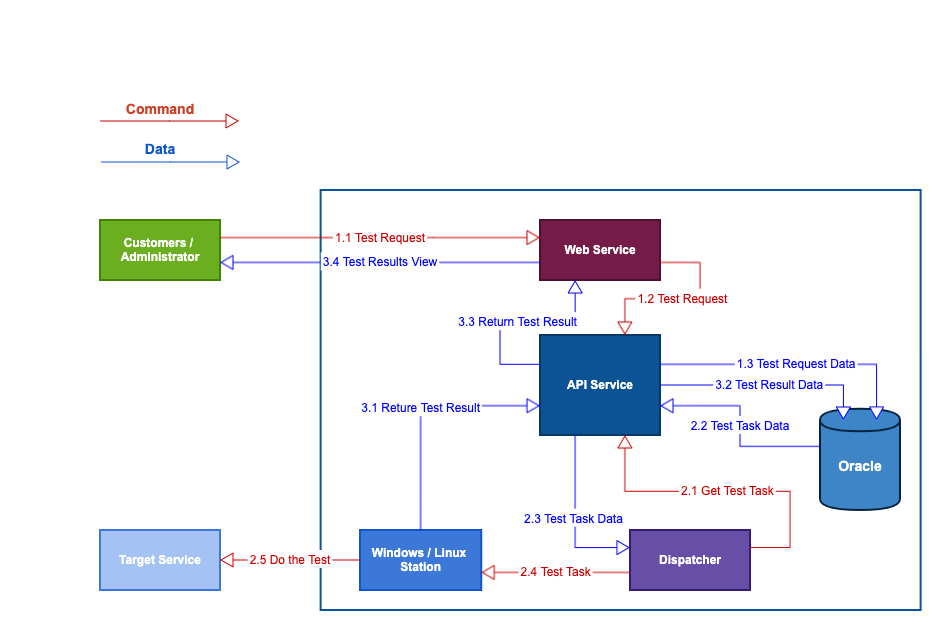
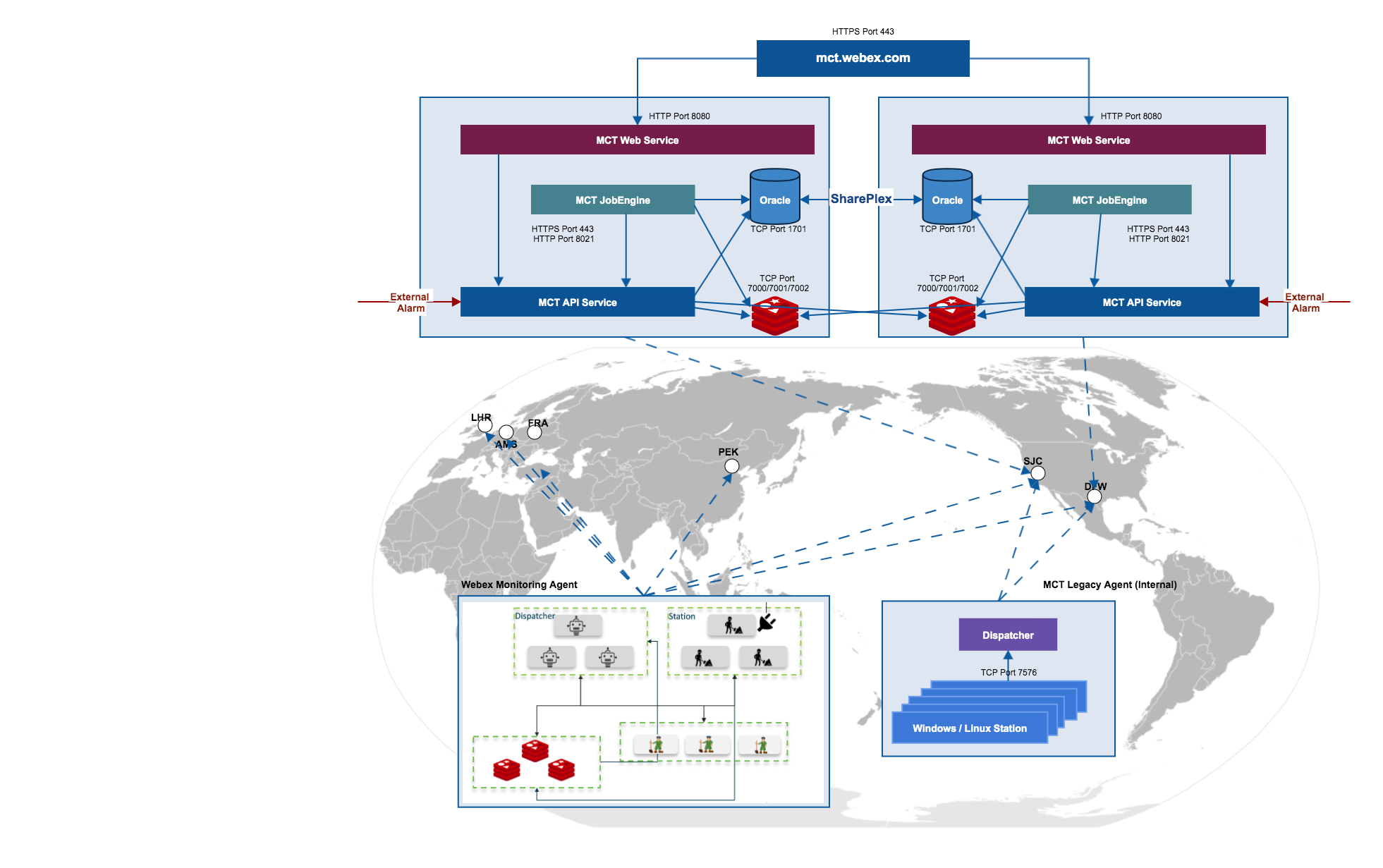
MCT includes Web Service, API Service, Job Engine, Dispatcher, Windows Station, Linux Station, etc. It uses PostgreSQL as storage and Redis for caching.
- Web Service: Web Service (
mwbsvr) is the MCT Web Portal Service. It serves as a critical component of the MCT architecture. The majority of users leverage the MCT portal to facilitate the configuration of application/service monitoring settings, and to access and assess application/service test outcomes.
- API Service: API Service (
mpisvr) stands at the core of the MCT infrastructure. It fulfills multiple essential roles, including processing user requests originating from the Web Service. Additionally, it orchestrates the provisioning of test tasks to the Dispatcher Service and retrieves test results from the Station Service. Beyond these internal functions, the API Service also extends API features to external users.
- Job Engine: The Job Engine (
mjesvr) is MCT's dedicated cron job engine. This component is designed to manage periodic and asynchronous tasks within the MCT environment. Notable examples of tasks overseen by the Job Engine encompass the synchronization of data with Redis, real-time monitoring of ticket statuses, cache data updates, external data synchronization, and more.
- Dispatch Service: The Dispatch Service (
winmdp) is a pivotal entity responsible for the orchestration of test task management. This service plays a vital role by interfacing with the local Redis cluster to allocate and assign check tasks to the Station Service.
- Station Service: The Station Service includes both the Windows Station (
winmwt) and the Linux Station (mulsvr). This service undertakes the critical function of executing test tasks. Subsequently, it records the outcomes of these tests and securely stores the results in the database via the API Service.
- PostgreSQL Database: Historically, MCT has utilized the Oracle but now using PastgreSQL databases as its primary storage solution. Each of the distinct geographical locations, SJ and TX, houses two instances of this database. The synchronization of data across different datacenters is chiefly facilitated through the Share Plex mechanism. It is important to note that a transition to the PostgreSQL Database is underway.
- Cache Service(Redis Cluster): MCT strategically employs the Redis Cluster as a powerful caching solution. This deployment spans across the SJC and DFW datacenters, with each datacenter hosting six individual Redis instances. Together, these instances collectively form a robust Redis Cluster configuration, consisting of three primary nodes and three secondary nodes. The Job Engine assumes the pivotal role of facilitating the incremental synchronization of database data with the Redis Cluster.
Data Flow