Configuration Change Control | Cryptography Management 
1. Purpose and Scope 
The purpose of this document is to define the standards for managing application configurations and sensitive credentials (secrets). Proper management ensures system stability, traceability, and security.
Support STIG compliance with CM-03-06.
2. Configuration Management 
2.1 Environmental Separation 
Configurations must be strictly separated by environment (Development, Staging, Production). Code should be environment-agnostic. Use environment variables or centralized config services to inject values.
2.2 Change Control Process 
All configuration files are maintained in a centralized version-controlled repository. Any modification to configuration must be performed through this repository to ensure proper version control and auditability.
All configuration changes must be reviewed and approved before implementation. The review process typically includes:
- Peer review via Pull Request (PR)
- Approval from designated reviewers or system owners
Changes cannot be merged into the main branch without the required approvals.
After approval, the change will be merged into the repository and deployed according to the established deployment procedures. All deployments must follow the standard release process.
3. Secrets Management 
3.1 Zero-Cleartext Policy 
Passwords, API keys, and certificates must never be committed in plain text to any version control system. GitGuardian is used to scan repositories and prevent secret leaks.
3.2 Dynamic Secret Injection 
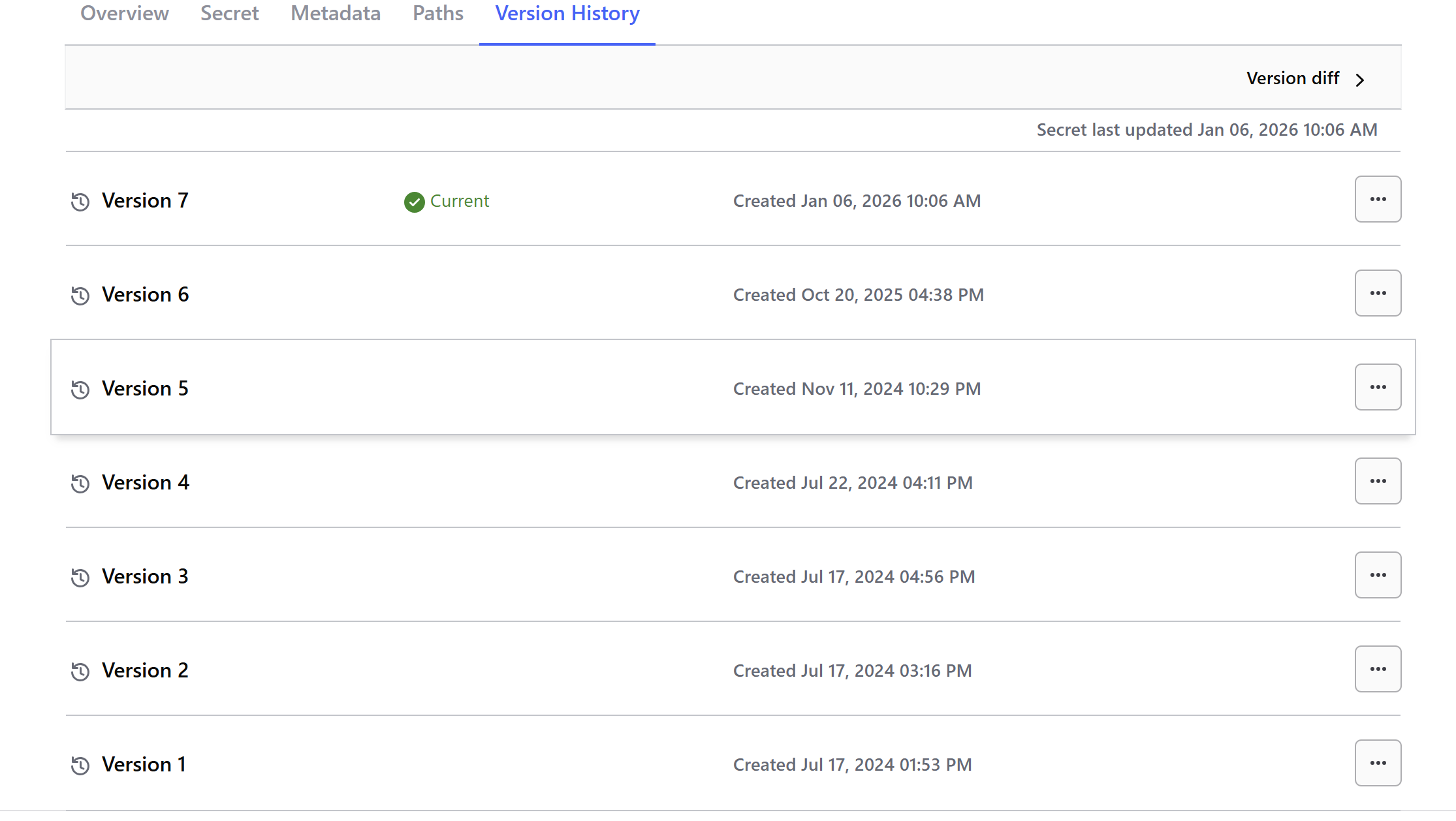
sensitive configuration values are centrally managed using HashiCorp Vault. Vault provides secure storage, access control, auditing, and dynamic secret generation for applications. Applications retrieve secrets dynamically from Vault during runtime through secure authentication mechanisms.
Secrets managed by Vault are periodically rotated to reduce the risk of credential exposure.