RUM
Definition 
Real User Monitoring (RUM) is a performance monitoring technique that captures and analyzes the interactions of actual users with a website or application in real-time. Unlike synthetic monitoring, which uses pre-scripted actions to simulate user behavior, RUM collects data from real users' activities, providing an authentic and comprehensive view of how end-users experience the application. This data includes metrics such as load times, error rates, and user engagement, allowing developers and operations teams to identify performance bottlenecks, diagnose issues, and enhance the overall user experience based on real-world usage patterns.
Why Need RUM 
Real User Monitoring (RUM) is essential for several reasons:
- Authentic User Experience Insights: RUM captures the actual interactions of real users, providing genuine insights into how they experience your website or application. This helps in understanding user behavior and preferences.
- Performance Visibility: By monitoring real-time performance metrics such as load times, error rates, and responsiveness, RUM helps identify performance bottlenecks that affect the end-user experience.
- Proactive Issue Detection: RUM enables the detection of issues as they occur, allowing teams to address problems before they significantly impact users. This proactive approach helps maintain a high level of service quality.
- Comprehensive Data: Unlike synthetic monitoring, which relies on predefined scripts, RUM offers a more comprehensive view by collecting data from a wide range of user environments, including different devices, browsers, and network conditions.
- User-Centric Optimization: The insights gained from RUM allow for targeted optimizations that improve user satisfaction and engagement. Understanding real-world usage patterns helps prioritize enhancements that matter most to users.
- Business Impact Analysis: RUM helps correlate performance issues with business outcomes, such as conversion rates and user retention, enabling data-driven decisions that align with business goals.
Apdex 
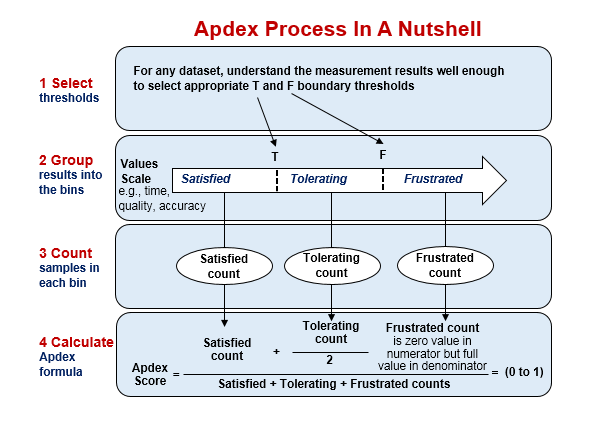
Apdex is a standardized way to report on just about our real user experience by converting many measurements into a single simple to understand zero-to-one score. Apdex is similar to NPS (Net Promoter Score) or MOS (Mean Opinion Score) in that it measures the user experience rather than the internal state of a system. However, the key difference is that Apdex is calculated automatically as shown in the figure below, whereas NPS and MOS require manual input from customers.